Quick Ideas

In the initial screening process for new investments, it helps to review quick information for multiple companies. I provide regular articles to highlight groups of dividend-paying companies under various themes and concepts so that you can help find investments you're interested in, and you can find them below.
 
Dividend Newsletter:
For convenience, you can get monthly dividend stock ideas and market updates via my free dividend growth newsletter. I'll point out individual stocks and sectors that I believe are trading at appealing valuations:

5 Dividend Stocks Trading at Appealing Valuations

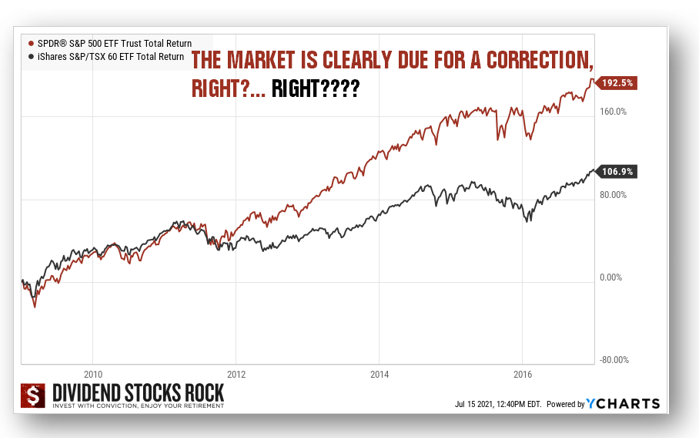
Top Dividend StocksThe S&P 500 has had a strong upward rise over the last four years, including a sustained increase for the year-to-date in 2013. This pushed dividend yields lower throughout the market, meaning investors can’t buy as large of an income stream with their money.

Despite that, there have been some blue-chip stocks that have missed out on part of this increase. Here are five of them at that trade at valuations that are lower than the rest of the market.

Chevron Corporation (CVX)

Chevron’s stock performance over the past four years has been admirable, but most of the increase in price occurred in in the 2009-2011 period. The stock has been fairly flat and choppy since then, and currently offers a dividend yield of 3.14%, a five-year dividend growth rate of approximately 9%, and a dividend payout ratio of under 40%. The dividend is likely to increase this quarter.

Cost over-runs at the enormous $50+ billion Australian Gorgon LNG gas project, as well as continued litigation risk from their ceased Ecuadorian operations seem to be keeping the stock valuation in check.

Chevron has a pristine balance sheet, and gas output in 2015 from the Gorgon project should be a driver for growth.

Intel Corporation (INTC)

Intel’s #1 problem is that they have the dominant position in the softening PC market. As the world’s largest semiconductor producer, they use their immense capital resources to keep ahead of AMD with the tick-tock method, but ARM has strongly outperformed Intel in the proliferating market of mobile computing devices. This leaves Intel holding the bag in the PC market, but fortunately they do have strong positioning in the growing server market.

Another strike against the company is that their billions spent on acquisitions over the last several years doesn’t seem to be having a material benefit. I pointed out in my 2010 analysis of the company that their McAfee acquisition, at 40 times earnings, doesn’t seem particularly justifiable unless several bullish assumptions all take place.

The company offers a hefty dividend yield of 4.1%, the most recent increase was over 7% (which I believe is a more practical measure of dividend growth at this point compared to their much larger five-year dividend growth rate), and so with a P/E of only 10, the company doesn’t require almost any core growth to offer investors a shot at double-digit returns. The company likely isn’t looking at a whole lot of growth, but since most of their cash goes to investors in the form of dividends and share buybacks (which fuels EPS/dividend growth), Intel stock is still in a reasonably appealing position.

Oneok Partners LP (OKS)

NGL prices haven’t been helping Oneok, but over the long term, their $5 billion in projects seem to present a clear path to growth over the next several years. I was a bit wary of this MLP back in 2011 when the unit price was soaring, but after a flat unit price of 2012 and 2013 along with continued distribution growth, OKS is looking a bit more attractive compared to the market these days.

With a 5.21% distribution yield and 6% annualized distribution growth over the last five years, the partnership is a strong income producer. Pipelines represent consistent, wide-moat infrastructure investments that are perfect for dividend investors.

For those interested in MLPs, two other partnerships that I’m bullish on (and own) for yield and growth, are Kinder Morgan Inc. (KMI) (full analysis) and Energy Transfer Equity LP (ETE) (recent analysis).

Air Products and Chemicals (APD)

With 30 years of consecutive dividend growth, APD has had some consistency. This company is the largest supplier of hydrogen to companies in the world, and generally signs long-term contracts with customers. The focus recently has been on cost-cutting and selling of non-core business units, and so their revenue for 2012 wasn’t as strong as 2011.

The dividend yield is a decent 3.31%, the dividend growth rate over the last 5 years has averaged more than 10% per year, and the balance sheet is quite strong with an interest coverage ratio of 10.

BHP Billiton ADR (BBL, BHP)

BHP Billiton, headquartered in Australia, is the largest mining company in the world. Two ADRs (with equal economic and voting rights) trade on the NYSE: BBL and BHP. BBL trades at a discount to BHP and therefore offers a higher dividend yield.

The market has boomed in 2013 while the stock price of BHP Billiton has fallen. On April 17th alone, BBL fell over 4.5%. The reason is, commodity prices have fallen compared to 2011, and institutional investors have pulled back a bit. That leaves BBL ADR shares with a 4.2% dividend yield. The 2007-2012 period saw annualized dividend growth of nearly 19% per year in USD, although the 2012-2013 dividend change has so far been 3.6% in USD.

Looking at this from a long-term view rather than a short-term one, BHP Billiton offers a strong combination of yield and growth, has highly diversified mining operations, and it will continue to offer materials that the world needs. At a P/E ratio of 15, the company is on sale compared to the market.

A Snapshot of the Market

The Shiller P/E of the market is currently in the range of 22-23, which places it well above its historical average of under 17, but lower than it was prior to the latest recession. Using the Shiller P/E as the metric of choice, the market’s overall valuation has been fairly flat over the last three years as both earnings and stock prices have risen.

While these five investments don’t necessarily represent recommended picks, they may be good places to look. The most recent issue of the dividend newsletter included three other stock picks that seem to be trading at reasonable valuations. Even in this moderately highly valued market, values can still be found.

Good Dividend Growth Candidates Often Have:
-A sum of dividend yield and expected future EPS growth that sums to 10 or higher. Assuming a constant stock valuation over time, the sum of yield and EPS growth is the best estimate for long-term returns, which can be quantitatively demonstrated with methods like the Dividend Discount Model.

-A sturdy balance sheet with an interest coverage ratio of 8 or higher. A company with a balance sheet that’s stronger than its peers has flexibility to make opportunistic investments, to take advantage of low interest rates to temporarily increase their debt and buy back shares, and to weather major economic downturns. Of course, for asset-heavy businesses like utilities or MLPs, a much lower interest coverage ratio is allowed and expected, and the credit rating becomes a more relevant assessment.

-A specific plan for the future. Rather than operating quarter by quarter, successful companies plan years ahead. Look for companies that proudly explain their plans over the next five years or so, including specific projects or specific growth targets and explanations of how they’ll meet those targets. Blue-chip stocks that have mild to moderate growth and that spend much of their money on dividends and buybacks are often consistent enough for investors and managers to make fairly accurate predictions about EPS and dividend growth over a business cycle.

Full Disclosure: As of this writing, I am long CVX, ETE, and KMI.
You can see my dividend portfolio here.

Strategic Dividend Newsletter:
Sign up for the free dividend and income investing newsletter to get market updates, attractively priced stock ideas, resources, investing tips, and exclusive investing strategies:

 Dividend Insights Newsletter

We respect your email privacy

5 Engineering Companies that Keep Boosting Dividends

Top Dividend StocksWhen investors think of dividend payers with the longest streaks of consecutive annual dividend increases, their minds may jump towards the Coca Colas and Procter and Gambles of the world, but some of the slightly more volatile diverse engineering companies have among the most consistent dividend histories.

Three of the companies on the short list of companies that have 50+ years of dividend increases without a miss are engineering companies, and they’re included below. The other two on this list are in the 40+ year range.

3M Company (MMM)

3M, the largest company on this list in terms of revenue, is the business behind the well-known Scotch Tape brand, but the bulk of their 55,000+ products are marketed towards other businesses rather than consumers. This includes abrasives, adhesives, films for LCD screens, toll booth technology, and safety products. The dividend yield is a bit low at 2.39% but comes with the momentum of five decades of consecutive annual dividend growth.

This business is strong and I believe shareholders will do fine over the long run, but as I described in the latest 3M analysis, the sum of EPS growth and dividend yield is a bit on the lower side which can impact long-term returns.

Emerson Electric (EMR)

Emerson Electric is positioned behind the growing fields of data centers and telecommunications. The world is becoming increasingly connected with more telecommunications infrastructure and more bandwidth, and cloud computing means a larger emphasis on servers rather than client machines, and these industries have the need for reliable power and cooling systems, reliable physical infrastructure to hold and connect the parts, etc. Emerson provides these things, and also is a global player in the industrial automation market.

With one of the more generous payout ratios on this list, Emerson currently offers investors a yield of just shy of 3% with more than five decades of consecutive dividend growth. The full Emerson analysis is here, and personally I’d wait for a pullback allowing a 3+% yield before making a buy here.

Dover Corporation (DOV)

Dover unfortunately offers the lowest yield on this list at slightly under 2% (all of these yields have been pushed lower due to the 2013 year-to-date strong bull market), but also has the longest dividend streak on this list, and as far as I’m aware has the third-longest annual dividend growth streak out of any company in the world.

The five operating segments of the company are Energy, Refrigeration and Food Equipment, Communication Components, Product Identification, and Fluids. The full analysis from a few months ago is available here.

Leggett and Platt (LEG)

LEG is the smallest company on this list but has the largest dividend yield of 3.50% and four decades of dividend growth without fail. The payout ratio appears high at first glance, but as detailed in the full analysis report, the company generates much more free cash flow than reported net income, so they’re able to pay the dividend and then pay just as much towards share buybacks or acquisitions.

The company has had quite the transformation over the last decade as they have divested considerable portions of their business to focus on their strong areas of furniture components, steel wire, shelving, and specialized engineering, and refocused themselves towards the specific and admirable goal of offering total shareholder returns in the top third of the S&P 500. Their business segments are operated like a portfolio, and listed as “grow”, “core”, “fix”, and “divest” to determine how much capital they’re allocated.

Illinois Tool Works (ITW)

Illinois Tool Works now has a similar business model of LEG, where they manage their business units like a portfolio, are divesting non-core units rather than focusing purely on growth, and are focusing on balanced total shareholder returns (core organic growth, acquisitions, dividends, and buybacks). As described in the full ITW stock report, the company is well-known for its focus on the 80/20 rule, where they’d rather limit their number of products and customers to maximize profitability than grow customers and products simply for the sake of growth.

The yield is currently 2.49%, and unlike many other businesses, their stock valuation has not soared in 2013 so they might be a good candidate to look into for dividend investors. I consider their current price to be fairly valued.

Three Notes About Engineering Companies

1) They tend to do well with acquisitions. In general, acquisitions have a reputation for being great for the acquired company but an often expensive and overpriced mistake for the acquirer. It’s sometimes referred to as “Empire Building” when a business seeks to grow itself simply for the sake of growth rather than for maximizing shareholder returns. Engineering companies, on the other hand, tend to make smart and consistent acquisitions at good prices as part of their regular growth policy. Occasionally they do a bit of streamlining and divest non-core operations and return the cash to shareholders.

2) With the exception of LEG and to some extent EMR, engineering companies tend to keep dividend payout ratios a bit on the low side. This is because as a group, they’re slightly more volatile than consumer businesses. They primarily sell their products to other businesses, so their earnings tend to be a bit more erratic during periods of economic weakness.

3) The positive aspect of their volatility is that this is one of the better industries to write puts or sell covered calls with. In many cases, you can lower your cost basis or make an annual return in the range of 8-15% by writing long-term puts or selling calls on companies in this industry. These tools are particularly useful for value investors when stock valuations are a bit on the high side.

Full Disclosure: As of this writing, I am long EMR and LEG.
You can see my dividend portfolio here.

Strategic Dividend Newsletter:
Sign up for the free dividend and income investing newsletter to get market updates, attractively priced stock ideas, resources, investing tips, and exclusive investing strategies:

 Dividend Insights Newsletter

We respect your email privacy

Railroad Stocks Appear Attractively Valued Across the Country

Top Dividend StocksThe Class I operators in the United States appear to be reasonably valued for long-term returns. The balance sheets are in solid condition, they all have competitive advantages against new competitors entering the market, and some of them pay decent dividend yields.

The Rail Renaissance

Ever since the 1980′s when deregulation allowed the rail companies to operate more profitability, railroad stocks in general have enjoyed market-beating returns. Improved automation technologies, increasing congestion of highways (which haven’t kept up with increases in car and truck traffic since the construction was initiated under President Eisenhower), and changes in energy costs (railroads are far more efficient with fuel than trucks are), have allowed railroads to improve their operating margins over time.

Investors have different approaches to stocks that have performed well. Some investors believe that buying stocks in an uptrend is a smart buying approach, while other investors believe the exact opposite, and instead look to enter positions after big setbacks.

A more fundamental approach is to ignore previous stock movements, and simply focus on the question of whether the current price is fundamentally undervalued, fairly valued, or overvalued compared to the intrinsic value calculated by estimates of forward-looking performance.

Despite the fact that many of these railroad stocks have already outperformed, some of the most-followed value investors that buy with very long-term horizons are the biggest owners in these companies. Bill Gates, and more specifically through his value-investing chief investment officer Michael Larson, is the largest shareholder of Canadian National Railway (CNI). Warren Buffett took it a step further and acquired the entirety of the Burlington Northern Sante Fe railroad in 2010, and this was his largest acquisition ever.

Based on valuation methods such as the Dividend Discount Model (DDM), many of these stocks appear poised to offer returns in the low double-digit range.

Returns Come Mostly From Shareholder Yield, Not Growth

One thing all of the railroad companies have in common is that they are using their free cash flow to buy back their own shares in large numbers and pay moderate-yielding dividends.

The shareholder yield of a stock is the sum of dividends and share buybacks divided by market capitalization.

In other words, if a company pays a 3% yield and buys back 4% of its shares each year (net of shares issued), then the shareholder yield is 7%. That’s essentially the expected long-term rate of return the investor gets when 0% core growth is expected. When there is growth, it is on top of the shareholder yield, and the shareholder yield is the internal rate of return the company can keep giving shareholders as long as it has stable free cash flows. If the railroad can boost actual volume by 1-2% per year over the long-term (they’ve been going a lot faster than that lately, but it’s part of a rebound and won’t continue indefinitely), and then maintain pricing power of 2-3% increase per year (or in line with whatever the inflation rate is over the period), then another 3-5% rate of return is added onto the shareholder yield.

Investing for the long-term in these railroad stocks, in other words, is basically a bet or estimate that they won’t decline in business. As long as they perform flatly, or have 1-2% growth and maintain pricing power, returns can be in the high single digits or low double digits over the next decade. There won’t be tremendous growth as there was over the last 25 years, but the industry appears to be a good one to put some capital. The companies can just keep chugging along, reducing the share count and raising their dividends, so that long-term investors can own larger and larger portions of the company and increase the yield on cost.

Risks that Could Threaten the Industry

Authors of articles such as this, this, this, and this (in chronological order), have voiced concerns over the risk that high-speed passenger lines, desired by the federal government, may harm freight railroad companies, or at least show the involvement government has to have with these freight lines in order to proceed.

During the unprofitable period of regulation of railroad stocks, the companies had to serve places that were not profitable to serve. The government proponents of high speed rail currently have to work with the freight companies to use some of their infrastructure, which can impact the efficiency of freight shipping.

It’s not a sure-fire problem. With proper planning, passenger trains and freight rail can coexist profitably. Nonetheless, it remains a risk for the industry.

If you like the fundamentals of the industry but want to increase your margin of safety and enter positions with a lower cost basis, selling put options can reduce the cost basis by 10% or so.

How to Play It

The Class I railroads in the United States are Norfolk Southern (NSC), CSX Corporation (CSX), BNSF (owned by BRK.B), Union Pacific (UNP), and Canadian National Railway (CNI).

Railroad Stocks
Image Source

Focusing on the U.S. rail lines, the railroad stocks are divided into two or three groups.

Eastern Group
The eastern group consists of CSX Corporation (CSX) and Norfolk Southern (NSC). They share very similar geographic positions across the eastern half of the United States. What you’ll see if you look at the stock price history is that they both took large recent stock price hits (especially NSC), because their coal volumes dropped substantially. There appears to be a long-term trend of natural gas replacing coal for electricity generation, and since three out of the top five states for coal production are in the eastern third of the country, these rail lines have a disproportionate share.

These two companies are also a bit more leveraged than their western counterparts. They took on a bit more debt to buy back shares more aggressively. Still, since they don’t have goodwill from acquisitions and their interest coverage ratios are comfortable, their balance sheets are fair.

The coal headwind and the slightly more leveraged positions have resulted in earnings multiples of only around 11 for both of these companies. These two can be considered the “value plays” out of the five companies.

Western Group
The western railroad stocks are significantly larger than the eastern ones, and their track systems cover two-thirds of the country rather than one-third. These two are Union Pacific (UNP) and BNSF (owned by Berkshire Hathaway).

Union Pacific has the largest track system in the country, has a strong balance sheet, and therefore has a higher earnings multiple at around 15. The company does have exposure to coal from Wyoming (the #1 coal-producing state), but since the overall track system and revenue are so much larger than the eastern rail networks, they have less relative exposure, and therefore despite taking a hit from their coal segment in the last quarter, their overall trend is up.

BNSF is not a pure play since it’s owned by Buffett’s Berkshire Hathaway. If you’d like exposure to the railroad along with insurance holdings, exposure to housing markets, and large stakes in Coca Cola, Wells Faro, IBM, American Express, and other stocks, then Berkshire may be a solid pick. The specifics of BNSF are largely the same as UNP.

Canadian Group
While CSX and NSC are rather similar companies on the east side, and UNP and BNSF are rather similar companies on the west side, Canadian National Railway (CNI) has a distinct position.

There are other Canadian railways, but CNI is the one that has an impact in the United States. They have the privileged position of owning rail lines that stretch from the Atlantic ocean to the Pacific ocean, and then a line that extends perpendicular to that system down to the Gulf of Mexico. They have complete access to all three coasts.

In terms of financials, the company is in similar shape to UNP with a strong balance sheet and a large operation. The operating margins of CNI are the best in the business, but this comes with an earnings multiple of 15. I view this stock as a bit pricey compared to the rest (mainly because its operating margins are already the highest and so there is less room for improvement), but nonetheless I would hold CNI if I currently had a position.

A decent play to add or increase exposure to railroad stocks is to diversify across an eastern and a western railroad, or CNI and one of the eastern or western railroads.

Here’s an overview of the current dividends of each stock:

Company Yield Payout Ratio
BNSF (Berkshire Hathaway) 0% 0%
Canadian National Railway 1.65% 25%
Union Pacific Corporation 2.23% 34%
CSX Corporation 2.81% 31%
Norfolk Southern 3.25% 36%


Full Disclosure: As of this writing, I have no position in any stocks mentioned. NSC is on my watch list for a long position.
You can see my portfolio here.

Strategic Dividend Newsletter:
Sign up for the free dividend and income investing newsletter to get market updates, attractively priced stock ideas, resources, investing tips, and exclusive investing strategies:

 Dividend Insights Newsletter

We respect your email privacy